Chain Restaurant Seating: Rolling Out Booth And Chair Packages Across 50 Sites
- Share
- publisher
- Lisa Liang
- Issue Time
- Nov 20,2026
Summary
Rolling out chain restaurant seating across 50 sites: booth modules, chair quantities, install sequencing, spare pools and the numbers that keep a programme on schedule.
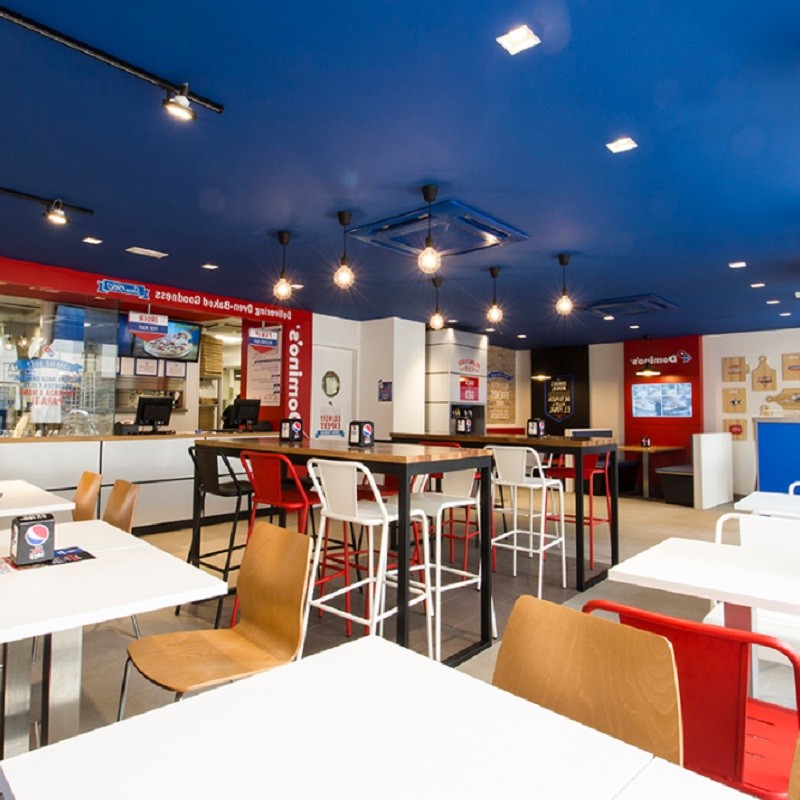
Quick Answer: How Do You Roll Out Chain Restaurant Seating at Volume?
Roll out chain seating in batches keyed to opening dates, not to container economics alone: 3–5 sites per batch, each batch shipping as one 40-foot container, with booth modules produced first because they are volumetric and least able to be added later. Hold a 2–3% spare pool centrally and a one-batch buffer in production. At 120 seats per site, a 50-site programme is 6,000 seats, roughly 1,200 booth places and 4,800 loose or bench places, and the schedule is set by factory slots rather than by the opening calendar.
For specification questions beyond the scope of this article, see the CDG FAQ library.
Seating is the item that most often delays an opening, because booths are built to a layout and a chair order is a stock item. A brand that orders chairs eight weeks out and booths ten weeks out will open on time; a brand that orders both eight weeks out will open with half a seating plan and a temporary bench where the booth should be.
Seating is a layout product, not a catalogue product
Chairs can be bought from stock. Booth modules cannot, because they are dimensioned to a wall run, a corner radius and a table height. That asymmetry is why seating programmes are sequenced from the booth backwards, and why the booth drawing is the document that must be approved first.
| Seating type | Quantity | Share of seats | Production lead time |
|---|---|---|---|
| Loose dining chair | 56–62 | 47–52% | Stock or 30–45 days |
| Bench or booth place | 36–42 | 30–35% | 40–55 days |
| Bar stool | 12–16 | 10–13% | Stock or 30–45 days |
| High stool or counter place | 8–12 | 7–10% | Stock or 30–45 days |
| Spare seats at 2–3% | 2–4 | — | Held centrally |
Table 1. Seating quantities for a 120-seat chain site.
Three checks worth taking from this guide
The Seating Mix That Repeats Across Formats
A rollout works when the mix is a ratio rather than a number. Express each format's seating as percentages — 50% loose chair, 30% booth, 12% bar, 8% high stool — and the quantities fall out of the seat count automatically. A 60-seat urban unit and a 200-seat flagship then use the same kit with different multipliers, which is what keeps the estate consistent while the footprints differ.
The ratio should be tested against daypart data before it is frozen. Breakfast-led sites drift toward two-seat and bar seating; family-led suburban sites drift toward booth and four-seat. If the brand operates both, the ratio needs two variants, not one compromise that satisfies neither.
Booth Modules: The Hardest Item to Roll Out
Booths carry the brand more than any other item and are the least forgiving to manufacture at volume. A 10 mm variation in wall run length produces a visible gap at the corner; a mismatch between booth seat height and table height produces a table that sits too high or too low for the bench. Both errors are drawing errors, not production errors, which is why booth drawings are approved before anything is cut.
Fixed, modular and demountable booths
Fixed booths are built into the site and cannot move; they are the cheapest per place and the least flexible. Modular booths ship as bench units that bolt to the floor and to each other, which gives consistency across sites and the ability to reconfigure later. Demountable booths can be removed and reused, at a 20–35% cost premium, and suit leased sites with short tenancies or brands that expect to relocate.
For a 50-site rollout, modular is almost always the right answer: it delivers factory consistency, arrives inspected, and still allows a site to change its seating plan without a rebuild. Fixed booths only win where the site is owned and the layout is certain for ten years.
Chair Quantities, Spares and Replacement Rate
Chair quantities should be ordered at the kit ratio plus a buffer, never seat-for-seat. Sites lose and damage chairs in the first quarter faster than at any other time, because staff are still learning the closing routine and customers are still learning the layout. A 2–3% central spare pool covers that period; a per-site spare allocation does not, because the site that needs four spares is rarely the site that ordered four.
Plan the replacement rate at 4–6% annually for a chain estate in daily use, and set the budget at handover rather than after the first damage report. That figure also sets the spare pool size: a pool smaller than one year's replacement rate will be empty within two quarters of a busy opening season.
Installation Sequencing Across a Region
Installation is a logistics problem with a furniture solution. A 120-seat site takes one to two days for two installers; booth modules take most of that time, and chairs take an hour. Sequencing across a region therefore means installing booths first, in the morning, and leaving chairs to the end of the day when the floor is clean and the other trades have gone.
Build three clauses into the installation contract: who protects finished floors, who removes packaging, and what happens when the site is not ready. The third clause matters most — a crew that arrives to an unfinished floor either waits at cost or installs badly, and both outcomes are worse than a rescheduled visit.
| Item | Working figure | Note |
|---|---|---|
| Sites per batch | 3–5 | Matched to factory slot and vessel |
| Install days per 120-seat site | 1–2 | Two installers, booths first |
| Packaging per site | 2–4 m³ | Must be removed same day |
| Spare pool | 2–3% of seats | Central, two-day dispatch |
| Annual replacement | 4–6% of seats | Budget agreed at handover |
| Buffer stock | One batch | Covers late vessel or damage |
Table 2. Installation and programme maths for seating at volume.
Quality Gates for Seating at Volume
At volume, quality failures are systematic rather than random: one dye lot drifts, one foam supplier changes, one weld setting goes out of tolerance. Three checks catch most of it. Colour against the retained chip on every batch, a gauge reading of coating thickness on a sample from every batch, and a dimensional check on the first booth module of each production run against the approved drawing.
Ask for batch photographs before loading, not after arrival. A photograph of the actual batch, with the retained chip in frame, is the cheapest quality document in a rollout and the one that most often prevents a 200-seat dispute at the site gate.
Programme Maths for 50 Sites
The programme adds up quickly: 50 sites at 120 seats is 6,000 seats, about 1,200 booth places and 240–360 spare seats. At 3–5 sites per month the programme runs 12–18 months, and production must hold 300–400 seats per month plus booth modules, which is the number to verify with the factory rather than the annual total.
Two buffers make the schedule survivable: one batch of chairs in production and one batch of booths finished but unshipped. Neither is free, and both are cheaper than a launch date missed by three weeks with a rent roll running.
The restaurant booths, commercial lounge seating and chain restaurant project pages carry the same load, cleaning and tolerance figures, so a specification written for one site can be reused across a multi-site rollout.
Let's Plan Your Seating Rollout
Send the site list with opening dates, the seat count per format and the booth wall runs. We will return a batch schedule, a booth drawing set for approval, a quantity schedule at the kit ratio, and a spare-pool and buffer recommendation sized to your opening rate. Batch photographs and gauge readings can be issued per container as standard.
Contact: lisaliang@cdgfurn.com | +86 139 2610 3331 (WhatsApp / WeChat) | Export office +86 20 3693 3270 | Inquiry form and contact page on cdgfurn.com.
Continue with the inquiry form, the contact page, the restaurant furniture catalog and the CDG Blog.
Answer-First Reference: Seating Rollout Numbers
chain restaurant seating is specified against measured duty cycles, documented material performance and a repeatable after-sales programme. The figures in this guide are working ranges used in pre-order reviews; confirm every threshold against the project brief and the purchase order before a deposit is paid.
How long does a booth module take to produce?
Forty to fifty-five days after approved drawings, versus 30–45 days for chairs. That lead-time difference is why booths are ordered first. Approving drawings late is the single most common cause of a delayed restaurant opening in a furniture programme.
How many spare seats should a chain hold?
Two to three percent of total seats, held centrally, with a pool at least equal to one year's replacement rate. For a 50-site programme at 120 seats that is 120–180 spare seats. Held per site, the same volume would be over-ordered and still unavailable where it is needed.
Should booth seating be fixed or modular?
Modular for multi-site rollouts, because it delivers factory consistency and can still be reconfigured. Fixed is cheaper per place but locks the layout; demountable costs 20–35% more and suits short tenancies. Most chains land on modular and stay there.