Sintered Stone Tabletops: The Sustainable Alternative to Marble for Commercial Tables
- Share
- publisher
- CDG Furniture
- Issue Time
- Sep 30,2026
Summary
Sintered stone tabletops offer a durable, sustainable, stain-resistant alternative to marble for all restaurant tables.
Every restaurant owner eventually faces the same reckoning. The Calacatta marble tabletops that looked stunning on opening day are now etched with dull patches from lemon juice, stained by red wine, and chipped along the edges. Natural marble is a calcium carbonate stone — it reacts chemically with acidic liquids, and that reaction removes a microscopic layer of the polished surface. The damage sits inside the stone. It cannot be wiped, bleached, or scrubbed away.
This is not a minor inconvenience. In a commercial setting, it is a liability. A single etched tabletop signals neglect to every guest seated at it. Multiply that across dozens of tables, and marble becomes a recurring operational cost rather than a one-time furniture investment. Restaurant operators need a surface that looks like luxury stone but behaves like industrial equipment.
That surface exists. Sintered stone tabletops are engineered from natural minerals — quartz, feldspar, clay, and silica — compressed under extreme pressure and fired at temperatures exceeding 1,200°C. No resin binders. No chemical additives. The result is a 100% non-porous, ultra-dense material with a Mohs hardness of 6–7, compared to marble's 3–5.
How a Sintered Stone Tabletop Factory Engineers Commercial-Grade Durability
The manufacturing process matters because it determines whether a tabletop survives five years or twenty. At CDG Furniture, our tabletops are produced in a facility that operates as a dedicated Sintered Stone Tabletop Factory, with every slab subjected to rigorous performance testing before it leaves the line. Here is what the engineering delivers:
Acid and Stain Immunity
Because sintered stone is not carbonate-based, it does not etch the way natural marble does. Lemon juice, wine, vinegar, tomato sauce, and coffee — the routine spills of restaurant service — are non-events. The surface wipes clean with a standard cloth. No sealing, no polishing, no special care routine.
Scratch Resistance That Holds Up to Commercial Abuse
With a Mohs hardness of 7, the surface resists cutlery dragging, ceramic plates sliding, and the constant friction of table turnover. Dropped forks and knives leave no marks. This is a direct benefit for any Commercial Table Manufacturer designing furniture that must endure thousands of service cycles per year.
Thermal Shock Resistance up to 1,200°C
Hot plates come straight from the kitchen and land on the table. Sintered stone handles it without discoloration or cracking. This makes it equally suited to indoor fine dining and outdoor patio service where tables sit in direct sunlight for hours.
UV and Weather Stability
For restaurant courtyards, rooftop terraces, and poolside dining areas, sintered stone resists fading and degradation from UV exposure. The surface will not lose its color or structural integrity under prolonged sun exposure. This is something natural marble cannot claim.
40% Lighter Than Quartz at Equivalent Durability
A 12mm sintered stone tabletop weighs roughly 40% less than a 20mm quartz slab. That weight difference matters for pedestal base specifications, floor loading, and ease of rearrangement during deep cleaning or reconfiguration.
Why Sintered Stone Qualifies as a Sustainable Alternative
Sustainability in commercial furniture is not a marketing checkbox. For hotel groups and restaurant chains with environmental procurement policies, material choice is a compliance issue.
Sintered stone is made entirely from natural minerals without chemical binders, making it fully recyclable. The manufacturing process eliminates the quarrying waste and high fabrication loss margins associated with natural stone extraction. There are no toxic resins, no VOCs, and the surface is completely food-safe — a critical requirement for any tabletop that comes into direct contact with plated food.
For a Sintered Stone Table Supplier serving the hospitality industry, this combination of recyclability, non-toxicity, and extreme longevity represents a genuine reduction in lifetime environmental impact. A tabletop that lasts 15–20 years instead of 5–7 does not need to be manufactured, shipped, and installed nearly as often. That is sustainability measured in operational reality, not brochure language.
Indoor and Outdoor Applications: One Material, Every Dining Environment
The versatility of sintered stone tabletops eliminates a common procurement headache. Instead of sourcing marble for indoor dining rooms and a different material for outdoor patios, operators can specify a single surface across the entire venue.
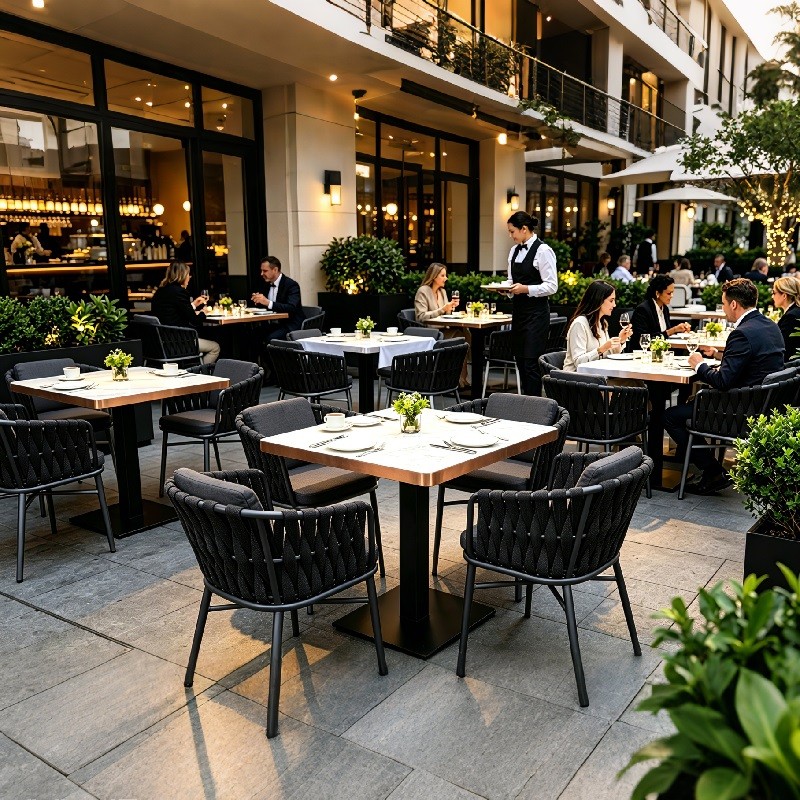
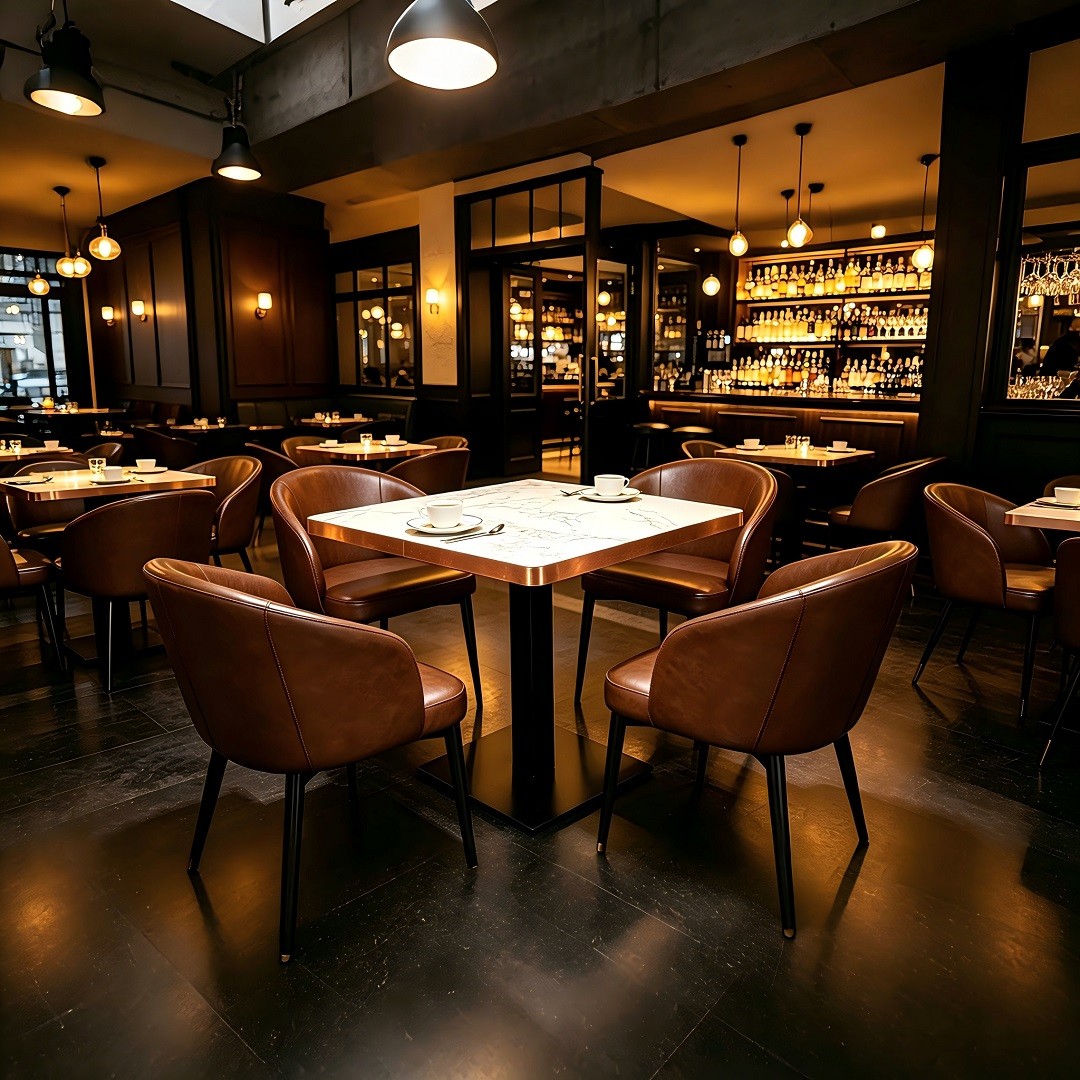
In the indoor setting shown in our product imagery, dark sintered stone tabletops with black corded chairs create a refined, contemporary atmosphere. The surfaces are set with white plates and coffee cups, demonstrating the food-safe, hygienic quality that restaurateurs require. The non-porous structure prevents liquid absorption and bacterial growth — an essential feature for any commercial dining surface.
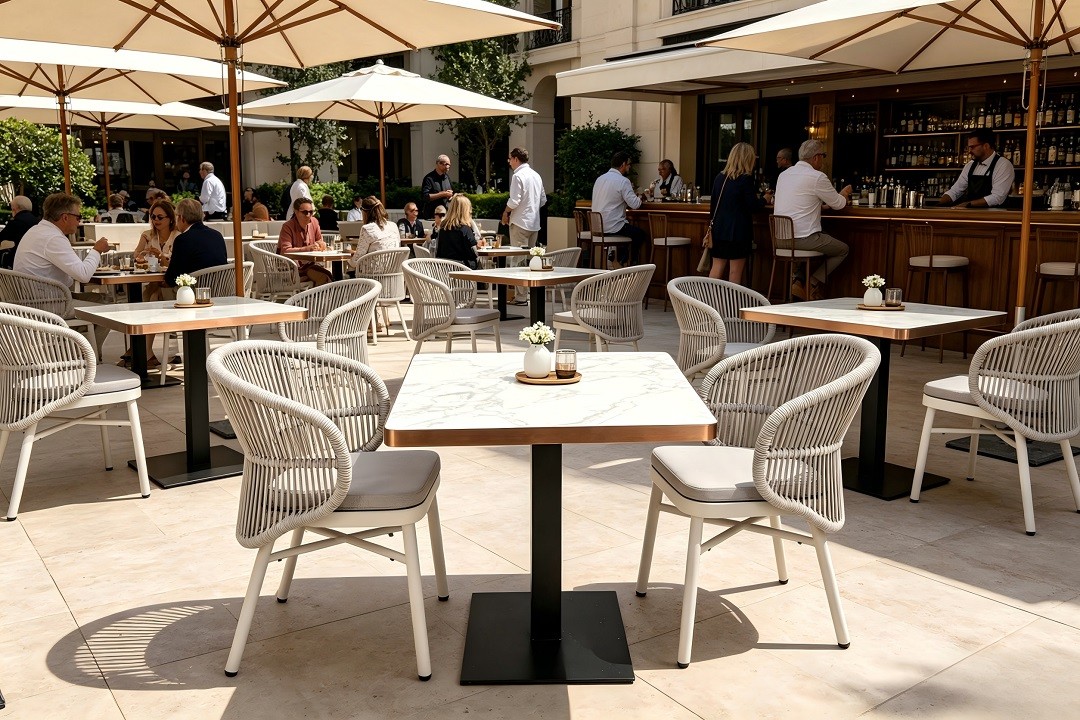
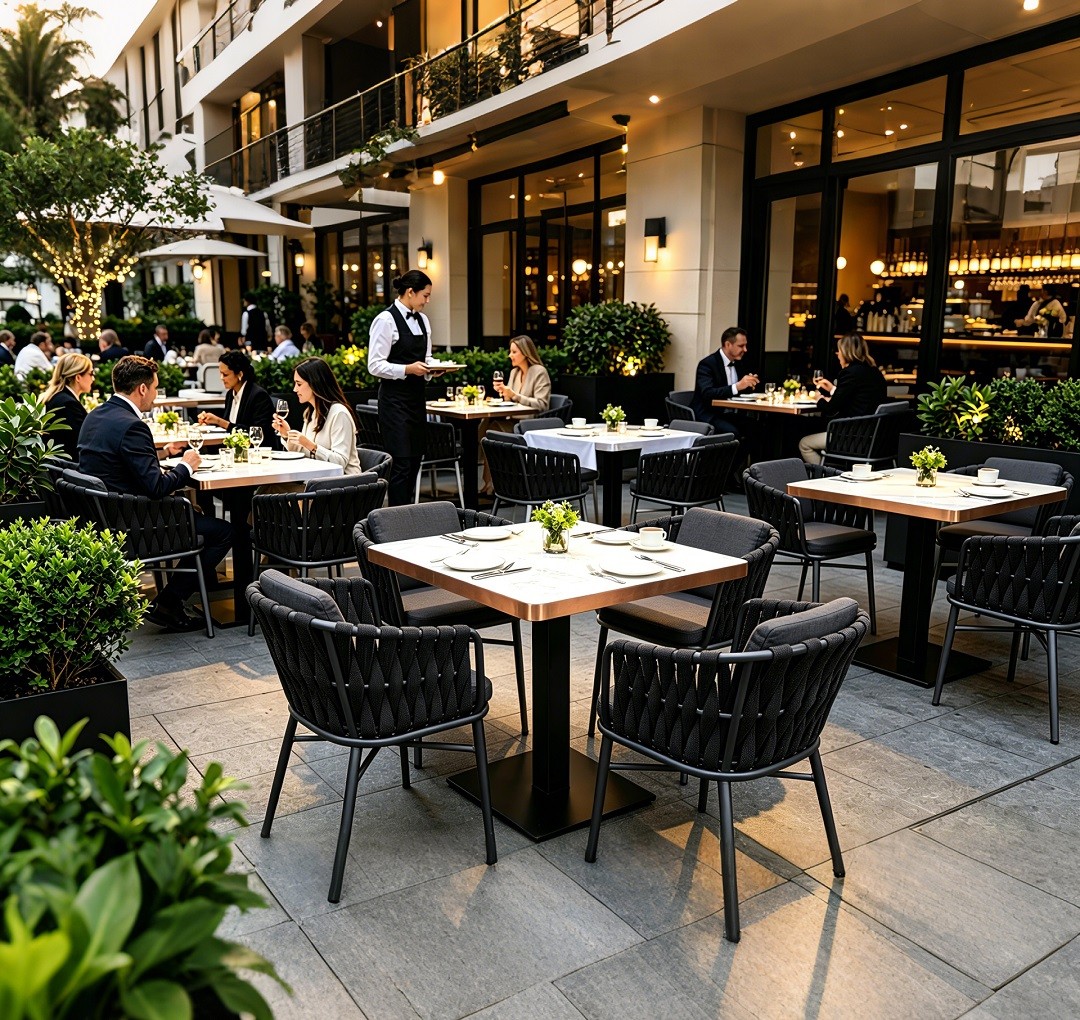
Outdoors, white sintered stone tabletops paired with rope-weave chairs and cream umbrellas define a sunlit terrace environment. The material's UV resistance ensures the surface remains pristine through seasons of direct sun exposure. No seasonal fading. No warping from humidity. The same tabletop that handled a busy indoor lunch service can be relocated to the patio without performance compromise.
Commercial kitchen and service teams benefit as well. Sintered stone tolerates aggressive commercial sanitizers — bleach-based cleaners, acid detergents, and quaternary ammonium compounds — without dulling or degrading. Marble would be irreversibly damaged by these products. For restaurants operating under strict hygiene protocols, this chemical resistance is not optional.
What Restaurant Operators Should Verify Before Sourcing
Not all sintered stone tabletops are manufactured to the same standard. When evaluating a Commercial Table Manufacturer or Sintered Stone Table Supplier, procurement teams should confirm:
- Thickness specification. 12mm is suitable for smaller indoor tables. For larger surfaces or high-traffic commercial environments, 20mm provides superior structural stability and is the safer choice.
- Edge construction. Aluminum-edged or reinforced tabletops resist chipping at the perimeter — the most vulnerable point of any stone surface.
- Backing and mounting system. A reinforced layered construction with waterproof plywood or aluminum honeycomb backing ensures the tabletop mounts securely to pedestal bases and absorbs vibration during service.
- Fire and heat certification. Ask for documented thermal shock resistance. The 1,200°C sintering process should translate into verifiable performance data.
At CDG Furniture, every sintered stone tabletop we produce is backed by a commercial-grade construction standard designed specifically for hospitality environments. Our factory-direct model means you work directly with the people who make the product — no intermediaries, no markup stacking, and full visibility into lead times and customization options.
Get Your Sintered Stone Tabletop Sample and Factory Quote
We work with restaurant groups, hotel procurement teams, and contract furniture distributors worldwide. If you are evaluating sintered stone tabletops for a new venue, a renovation, or a multi-location rollout, here is what we can do next:
Send us your specifications — table dimensions, quantity, edge finish preference, and intended use (indoor, outdoor, or both). Our team will respond within 24 hours with a factory-direct quote.
Request physical samples. We ship sintered stone tabletop samples in your preferred color and finish so you can evaluate the surface quality, weight, and edge construction before committing to an order.
Book a factory video call. See our production line, quality control process, and packaging standards in real time. We will walk you through every stage from mineral mixing to final inspection.
Fill out the inquiry form below with your project details. Whether you need 50 tabletops for a single restaurant or 500 for a hotel chain rollout, we will give you a direct answer on pricing, lead time, and customization capabilities.
Your tables will be the hardest-working surfaces in your venue. They should be engineered for that job.