Outdoor Restaurant Sets: 12 Patio Table & Chair Combinations That Boost Curb Appeal
- Share
- publisher
- CDG Furniture
- Issue Time
- Oct 24,2026
Summary
12 commercial outdoor restaurant table and chair sets that boost curb appeal, durability, layout, and outdoor restaurant sets wholesale value.
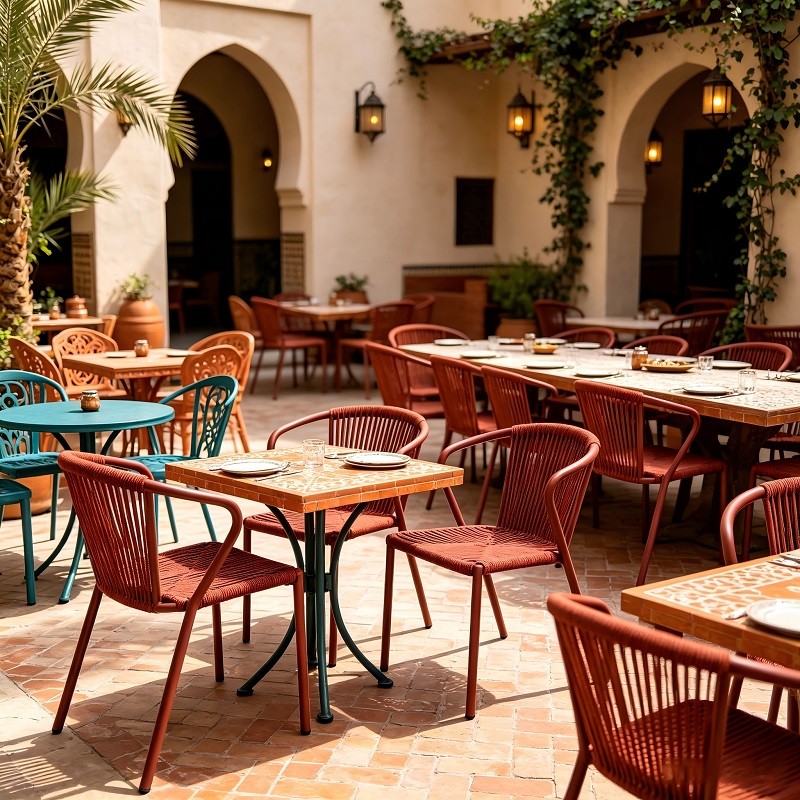
Your patio is the first thing a guest sees before they ever read a menu. A mismatched, wobbly set of tables and chairs tells a story of short-term thinking. A deliberate, durable, and visually cohesive patio tells a different story: that the experience inside will be just as considered. For restaurant owners and food-and-beverage operators, outdoor seating is not decoration. It is a revenue-producing extension of the dining room—and the right outdoor restaurant sets decide whether that extension earns its square footage.
As an Outdoor Restaurant Furniture Manufacturer and Outdoor Restaurant Furniture Supplier, we work with independent cafés, beachfront restaurants, rooftop lounges, and multi-venue hospitality groups across different climates. The patterns are consistent: patios that convert browsers into diners are built on commercial-grade furniture chosen for the venue’s layout, traffic patterns, and brand identity—not on whatever residential sets happen to be on sale. Below are 12 patio table and chair combinations worth studying, followed by the specification and wholesale logic that separates a one-season patio from a five-year asset.
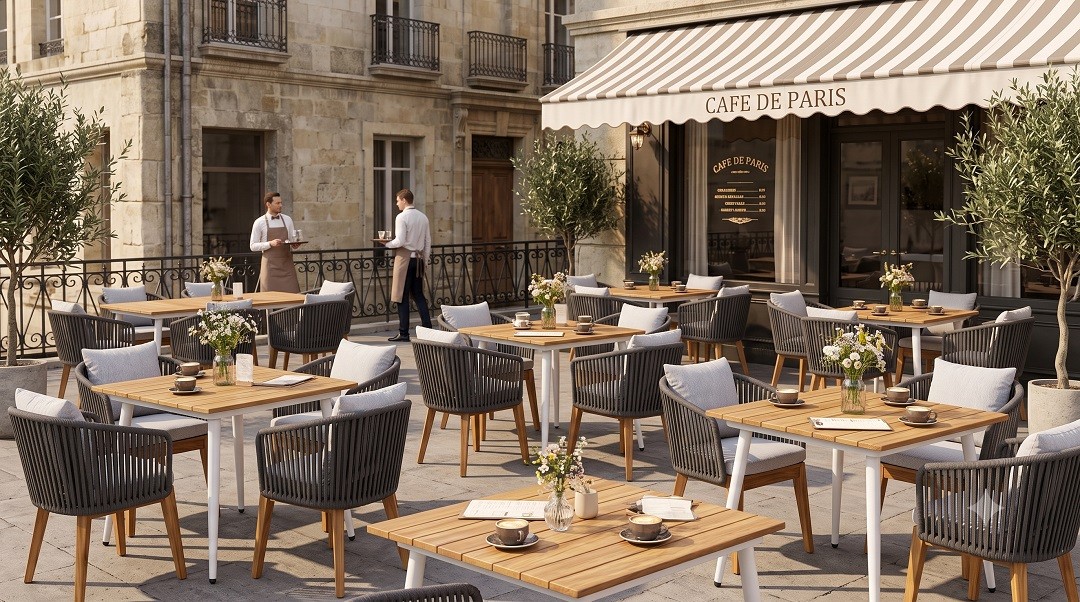
Outdoor Restaurant Table and Chair Sets: What “Restaurant-Grade” Actually Means
Residential patio furniture and commercial patio furniture look similar in photos. In service, they are different products. A restaurant patio chair may see 10 to 20 seatings per day during peak season; a residential chair might see two. That multiplied stress shows up at welded joints, powder-coated finishes, and seat frames long before it shows up in a photograph.
Commercial-grade outdoor restaurant table and chairs are built to meet performance standards rather than aesthetic benchmarks alone. The ASTM F1561 standard, for example, sets performance requirements for outdoor plastic seating and is commonly referenced in foodservice procurement; many commercial resin chairs are tested to ASTM F1561 Class B and rated to support around 300 pounds. The ASTM F2006 standard goes further, covering cycle testing for structural integrity in commercial outdoor furniture. Powder coatings on commercial frames are applied at 3 to 5 mils, versus roughly 1.5 to 2 mils on residential pieces, because commercial patios face daily sanitizer wiping, pressure washing, and constant UV exposure. Quality commercial aluminum furniture can last 8 to 12 years in restaurant service with proper maintenance, compared with 2 to 3 years for residential-grade pieces used commercially.
That is the baseline. The 12 combinations below apply restaurant patio sets logic across different service styles, footprints, and climates.
Round vs Square Outdoor Restaurant Tables: Which Layout Works Best
Before choosing a set, choose a geometry. Round vs square outdoor restaurant tables is one of the highest-leverage decisions in patio planning because it determines seating density, traffic flow, and the psychological feel of the space.
Square tables are the operator’s workhorse. Two two-tops can be pushed together for a four-top during a rush, then separated again for the next seating. Their straight edges fit along walls, railings, and planters without wasting corner space, and they pair naturally with stackable chairs for end-of-night storage. Restaurants that adjust seating frequently—brunch service, event nights, weather-dependent patios—tend to get more usable covers per square meter from square configurations.
Round tables prioritize flow and conversation. In tighter layouts, a round table allows guests and servers to move around the edge without the sharp corners of a square top. The trade-off is that round tables generally require more surrounding clearance and can yield lower turnover but higher check averages, because the shape encourages guests to linger. For sidewalk cafés, balcony patios, and smaller terraces, a 60–70cm round two-top is often the most space-efficient commercial choice.
A practical planning note: a four- to six-person round or square setting should be budgeted at roughly 10.5 × 10.5 feet of patio space once chairs, egress, and service paths are accounted for. Pair geometry with commercial patio sets that actually fit the footprint, not the other way around.
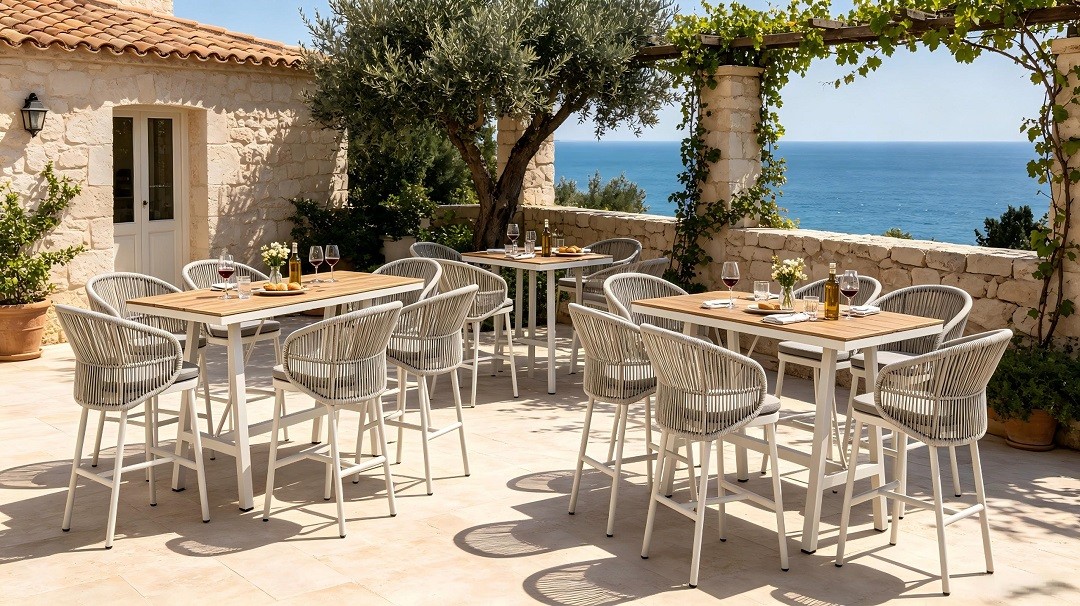
12 Patio Table and Chair Combinations for Different Restaurant Concepts
The following combinations are organized by venue type and service rhythm. Each assumes commercial-grade construction and a clear operational rationale.
1. The Sidewalk Café Two-Top
A 60–70cm round table paired with two stackable bistro chairs outdoor chairs. Lightweight, easy to reset between covers, and visually inviting from the street. Ideal for coffee-focused patios and daytime foot traffic.
2. The Flexible Square Four-Top
A 70–80cm square table with four stackable armchairs. The building block of high-turnover patios: pairs combine into larger groups, and the square top maximizes seating against walls and railings.
3. The Communal Rectangular Six-Top
A 160–180cm rectangular table paired with six side chairs. Suited to resort restaurants, hotel breakfast terraces, and venues that see family groups and shared plates.
4. The All-Weather Resin Outdoor Dining Set
A molded commercial resin outdoor dining set in a coordinated finish. Resin resists food stains, salt air, chlorine, and moisture; it does not absorb water or harbor mold in humid conditions, and it cleans with soap and water. This is the low-maintenance backbone of poolside restaurants, beachfront venues, and tropical patios.
5. The Upgraded Outdoor Dining Table Resin Set
A outdoor dining table resin set with a reinforced resin or powder-coated aluminum base, paired with heavier commercial resin armchairs. The added top thickness and edge profile resist chipping and impact at contact points—the areas that fail first on lighter residential resin sets.
6. The Aluminum Bistro Set
Powder-coated aluminum frames in a compact two-top or four-top configuration. Aluminum is lightweight enough for staff to rearrange solo, rust-resistant, and easy to clean; it is also fully recyclable, which matters for hospitality groups with sustainability reporting requirements.
7. The High-Density Bench Set
A rectangular table with bench seating on one or both sides. Bench configurations can increase linear seating density by 20–30% compared with all-chair layouts, directly reducing per-seat cost and increasing covers in tighter footprints. Best for casual, high-volume concepts rather than white-tablecloth service.
8. The Rooftop Lounge Four-Top
A square or low rectangular table with wider-seat lounge dining chairs. Prioritizes comfort and dwell time for evening service; stackability is less important than visual weight and cushion performance. Specify UV-resistant outdoor fabric to prevent fading and mildew.
9. The Courtyard Mix-and-Match Set
Two or three different chair silhouettes around the same table family—a side chair, an armchair, and a bench—unified by frame finish and tabletop material. Creates a curated, residential-feeling patio without sacrificing commercial durability. Works best when all pieces share the same manufacturer and finish system, so replacement parts remain available.
10. The Coastal Salt-Air Set
A resin or powder-coated aluminum table with non-corrosive hardware and marine-grade resin components. In seaside locations, saltwater and wind accelerate corrosion on cheap steel and untreated aluminum; commercial resin and properly coated aluminum are the specification that survives.
11. The Compact Balcony Two-Person Set
A 60cm square or round table with two armchairs that tuck fully under the top when not in use. Designed for urban restaurants with narrow façades and limited patio depth, where every inch of clearance affects service flow.
12. The Expandable Event Patio Set
A set of modular four-tops that share a common table height and chair profile, allowing staff to create two-tops, four-tops, or an eight-top run depending on the night’s reservations. The value is not in the individual set but in the standardization: one chair height, one connection method, one replacement stock.
Mixing and Matching Outdoor Restaurant Chairs for Comfort and Style
Mixing and matching outdoor restaurant chairs is a design tool, not an excuse to buy from unrelated sources. The most durable mixed patios share three things: a common seat height, a common frame finish or material family, and a common commercial rating.
Seat height is non-negotiable. Standard dining tables sit at 72–76cm, which pairs with a 42–45cm seat height; counter and bar heights require dedicated chair specifications. A 45cm chair pushed up to a counter-height table produces an uncomfortable, low dining posture that guests feel immediately, even if they cannot name it.
Finish and material consistency matter for more than aesthetics. A powder-coated aluminum frame and a commercial resin chair can coexist visually if the colors are drawn from the same palette, but the maintenance routines differ: aluminum needs occasional wiping, while resin can be hosed down. From a purchasing standpoint, standardizing on one or two material families reduces the spare-parts inventory a venue must carry and simplifies staff training on cleaning protocols.
Weight capacity and stability testing belong in the same conversation. Commercial chairs that meet ASTM F1561 Class B are rated to around 300 pounds; some reinforced commercial pieces are tested to higher capacities. For venues with diverse guest populations and high traffic, this is a specification worth confirming before a bistro chairs outdoor order is placed, not after.
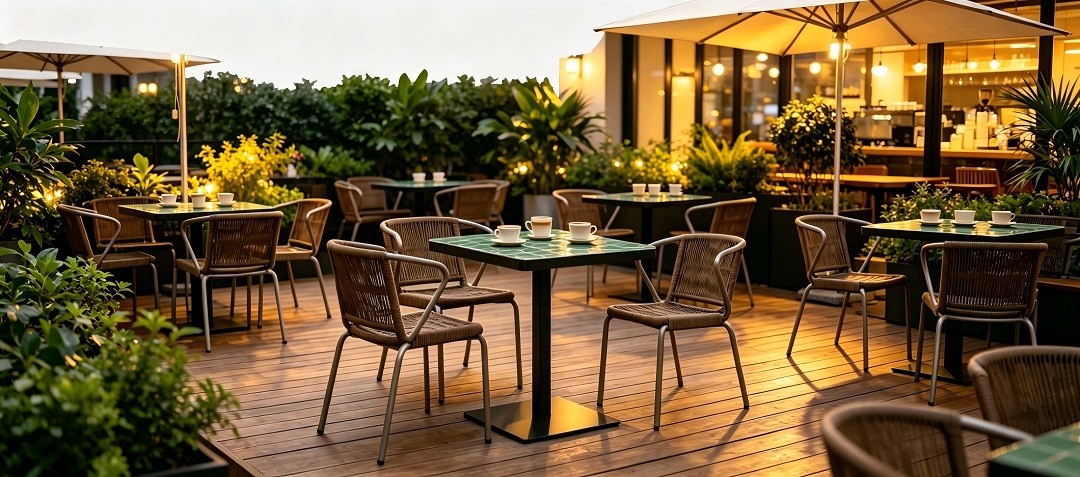
Wholesale Outdoor Restaurant Sets: Sizing, Materials and Pricing Logic
Wholesale outdoor restaurant sets pricing is not simply a discount off a single-unit price. It reflects the specification decisions that determine how long the furniture stays in service. A patio dining set that handles 6–12 hours of daily guest turnover and 300–500 seating cycles per month per table is subjected to stresses that a residential set never encounters: tabletop scratches, loosened chair joints, and powder-coat wear at contact points.
Sizing drives cost before material choice does. A 100-seat restaurant patio requires roughly 25–30 dining sets; a resort with three dining venues may need 80–120 sets. The per-set cost difference between correctly specified commercial dining sets and under-specified residential-grade sets may be $40–$80, but the replacement cost difference over five years is two to four times that amount. In wholesale planning, the relevant question is not the invoice price of the first order; it is the cost per usable seat per year across the furniture’s service life.
Material pricing follows the same logic. Commercial resin sets sit at the low-maintenance end: lower replacement frequency in humid, coastal, and poolside environments, and no refinishing. Powder-coated aluminum commands a higher unit price but offers a lighter frame for frequent rearrangement and a long service life in high-turnover settings. Teak and faux-teak systems occupy the premium visual tier, but natural teak requires regular maintenance, which adds labor cost that is often overlooked in the purchase comparison.
For buyers sourcing through an Outdoor Restaurant Furniture Supplier with factory-direct production, the wholesale conversation should also cover table height standardization, chair stackability, replacement-part availability, and finish consistency across production batches. These are the variables that protect a multi-year patio investment, and they are easiest to resolve before the purchase order is issued.
A Patio Planning Resource for Your Venue—No Obligation
Every patio has a different footprint, climate, and service model. Rather than guess which combination will produce the best covers-per-square-meter, we offer a no-cost Restaurant Patio Layout & Wholesale Specification Brief. Share a few details about your venue—seating target, patio dimensions, climate exposure, and service style—and our team will return a practical combination recommendation with commercial-grade material options, stacking and storage notes, and a wholesale price direction.
It is a working document for your next patio decision, not a sales pitch. If the numbers make sense, we can move to samples and a formal quote. If they do not, you still leave with a clearer specification for your project.
Request your Outdoor Restaurant Sets Patio Layout & Wholesale Specification Brief here.
For buyers ready to compare product families directly, explore our Outdoor Restaurant Sets Wholesale range, browse Outdoor Tables Wholesale and Outdoor Chairs Wholesale for individual component pricing, or review the Commercial Outdoor Solution for full-project coordination.