Outdoor Lounger Chairs & Commercial Chaise Lounges: The Poolside Buying Guide
- Share
- publisher
- CDG Furniture
- Issue Time
- Nov 11,2026
Summary
A B2B poolside buying guide for outdoor furniture wholesalers: how to specify commercial chaise lounges, compare frame and seating materials, plan deck quantities, verify certifications and MOQs, and request a factory-direct quote.
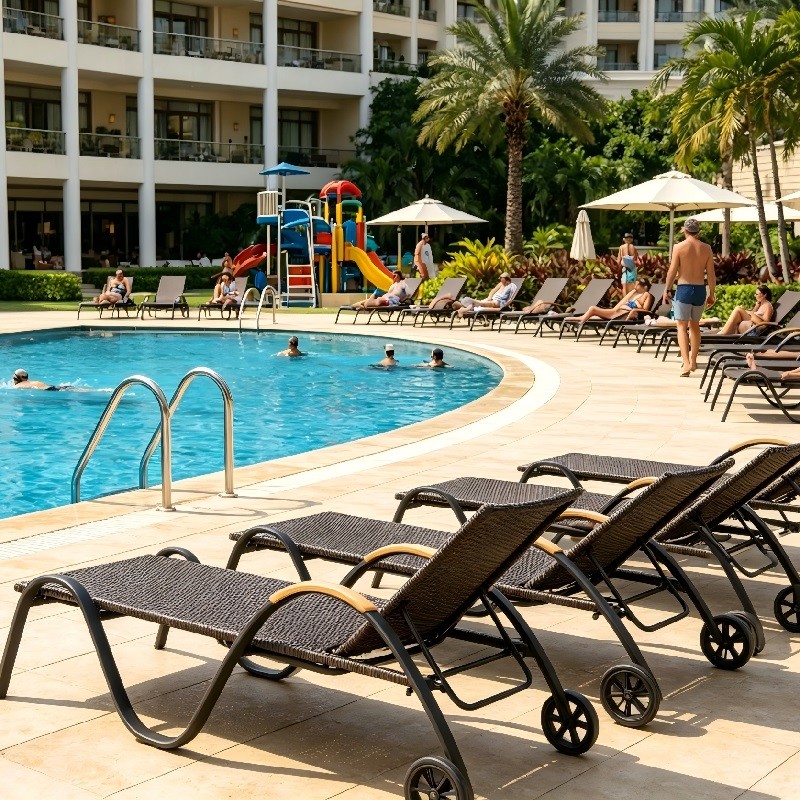
The short answer for volume buyers: for a chlorinated or coastal pool deck, specify a powder-coated aluminium frame, a quick-drying Textilene sling or UV-stabilised woven surface, a commercial-rated multi-position backrest, corrosion-protected fasteners, and a frame geometry that stacks without scuffing the finish. That build outlasts residential sun loungers by seasons, keeps slings and wheels serviceable, and - critically for outdoor furniture wholesalers - stays consistent enough to reorder next year without a colour or fit mismatch. This guide is written for the people who build catalogues and fill containers: outdoor furniture wholesalers, importers, hospitality distributors and project procurement teams buying for hotels, resorts, beach clubs and poolside venues across Europe, the Middle East, the Americas and Asia-Pacific. It covers the specification decisions that protect your margin, the questions your own B2B customers will ask, and the documentation a serious factory should be able to put in writing. A commercial chaise lounge is a weather-exposure product rated for repeated daily guest use, with serviceable wear parts and documented load, UV and corrosion performance - not a residential sun lounger with a stronger-sounding name. A lounger looks like a simple SKU: one frame, one backrest, one seating surface. In a wholesale programme it is four things at once - a load-bearing product used by guests who are wet, heavy and in a hurry; a repeat-order item whose finish must match last season's shipment; a bulky, low-density carton that decides your freight cost; and a warranty liability that lands on your desk, not the factory's, when an end client complains. That is why the cheapest quotation is rarely the cheapest programme. A residential-grade sun lounger placed on a commercial pool deck usually shows its first failure at the recline pivot or the sling attachment within a single high season. For a distributor, that failure becomes a credit note, an emergency replacement shipment, and a difficult conversation with a hotel group buyer who is deciding next year's supplier list. Commercial chaise lounges are specified to remove those events, not merely to look sturdier in a catalogue photograph. Ask for a declared static load rating - 300 lb (136 kg) is a reasonable floor for contract use, with 350-400 lb preferred for resort and public-pool applications. Confirm the aluminium tube gauge (1.2-1.5 mm is the working range for commercial frames), reinforced welding around backrest pivots and wheel axles, and a recline mechanism rated for repeated daily adjustment rather than occasional weekend use. Fasteners should be stainless or properly isolated from the aluminium to avoid galvanic corrosion; on coastal projects, request a marine-grade powder-coating system and protected hardware explicitly. Finally, insist that the sling, wheels and pivot hardware are replaceable parts you can stock, not integral components that force a whole-unit replacement. If a supplier can answer those five points in writing - load rating, tube gauge and coating, recline cycle rating, hardware specification, and spare-part availability - you are dealing with a manufacturer. If the answer is a lifestyle photograph and a unit price, you are dealing with a trading catalogue. Sling tension and edge attachment lose shape after repeated full-body loading, long before the frame is tired. Pivots and locking positions wear out under daily guest adjustment; a wobbly back reads as unsafe to a hotel guest. Welds, wheel axles and fasteners fail first in salt air, often bleeding rust onto a light pool deck. Powder-coat and yarn lots vary between repeat orders, so a top-up shipment no longer matches the installed fleet. Under-specified cartons crush when stacked in a container; the loss is discovered at the client's goods-in bay. No spare slings, caps or wheels available, turning a ten-minute repair into a full unit replacement. Each of these is a specification question, not a quality-control surprise. Write them into the purchase order and the claims rate falls before the first container ships. Material choice is an exposure decision, not a style decision. A rooftop pool in Dubai, a saline pool on the Adriatic coast and a shaded garden spa in Northern Europe do not stress a chaise in the same way. Write the exposure into the enquiry and let the factory propose a construction - a supplier that quotes one generic "outdoor" material for every market is quoting from a catalogue, not from engineering. An open-mesh Textilene sling drains and dries within minutes of a rain shower or a morning wash-down, and it does not hold the water that turns a cushion into a mildew problem. Combined with a powder-coated aluminium frame, it is the lowest-maintenance specification for chlorinated decks and high-turnover resorts. Ask for controlled sling tension, reinforced seat and back attachment points, and a replaceable sling panel - the panel is the wear item, and a serviceable one extends the working life of the whole frame. Cushions belong under cover on cabana daybeds, not on an open deck. UV-stabilised PE wicker or olefin rope over an aluminium frame delivers the warm, photographed look that sells premium cabanas and poolside daybeds. CDG's own aluminium-leg PE rattan lounger is built on exactly this logic: the rigidity of aluminium underneath, the hand-woven surface on top. For wholesalers, the checks are weave tension, reinforced edges, and whether the yarn is UV-stabilised and solution-dyed - a decorative weave that loosens or chalks after one summer is a returns problem, not a design feature. Polywood and synthetic-teak slats give the timber look with far lower upkeep, wipe clean and drain quickly. Solid teak remains the premium choice for spas and shaded terraces, but it needs oiling, sanding and a maintenance budget, and it is heavy to move and to ship. If a client insists on timber, keep it in covered or low-turnover zones and place the maintenance schedule alongside the unit price in your quotation, so nobody is surprised in year two. Most commercial chaises land in a narrow dimensional band: roughly 195-210 cm long (77-83 in), 65-76 cm wide (26-30 in), with a seat height around 35-40 cm. That consistency is useful - it means a distributor can build one layout template and reuse it across projects. What varies is the clearance. Plan about 60 cm (24 in) between adjacent loungers for guest privacy and staff access, plus a 90-120 cm service aisle behind or beside each row for housekeeping carts and towel service. A deck that looks generous in a rendering becomes cramped very quickly once umbrellas, side tables and towel bins are added. Start from the deck, not the room count. One chaise per 1.5-2 guest rooms is a useful scenario for a property with a single main pool, but a business hotel with a small rooftop plunge pool needs far fewer per key than a family resort where the pool is the primary amenity. Measure usable deck area, subtract circulation, shade structures, planters and emergency access, then place the chaises. Add 8-12% "shoulder" pieces - upright chairs, side tables and a couple of daybeds - for guests who do not want to lie flat, for families with small children, and for the shaded corner that always fills first. Then add one or two spare units per fifty for rotation and damage replacement. Stackability is a logistics specification. Ask for the safe stacking quantity in writing (four to six high is typical for nested aluminium frames), protected contact points so nested frames do not scratch the powder coat, and the folded or knocked-down carton dimensions. Two chaises with the same unit price can differ by 30% in landed cost once carton cube is calculated. Rear wheels with reinforced mounts make daily deck resets a one-person job; confirm the axle material, because wheel assemblies are among the first components to corrode in salt air. For shallow tanning ledges, only use in-pool loungers with explicit manufacturer approval for submersion, ballast and the specific pool finish - splash resistance is not submersion approval. For a complete deck rather than a single product line, our Commercial Outdoor Solution coordinates chaises, side tables, shade and dining pieces so finishes and lead times stay aligned across one order. Once the product is right, the commercial terms decide whether a programme survives its second season. Use this checklist before releasing a deposit, and ask for each answer in writing rather than on a sales call. Requirements differ by destination, and a distributor who can supply the paperwork wins tenders that a cheaper competitor cannot even bid on. EU buyers will ask for EN 581 evidence and REACH-conscious material declarations; hospitality groups often add factory social-compliance audits; public projects may request load and stability test reports from an accredited lab. Ask your supplier to bundle the relevant certificates with the quotation, and verify them against the published certificate list before you forward them to a client. A lounger is a high-cube, comparatively low-value item, so freight density drives the real margin. Request the exact carton dimensions, the number of units per 20ft and 40ft container, and whether frames ship nested or assembled. Model an Outdoor Furniture Wholesale order as a whole-container plan rather than a per-piece price: a slightly higher unit cost with better nesting frequently lands cheaper per saleable chair. For a wider view of how buying in volume changes the numbers, our Wholesale & Cost Control guides cover the same arithmetic for other outdoor categories. The most durable wholesale lounger programmes are not built from a stock photograph. They are built from a frame family: one aluminium platform delivered as a single chaise, a double daybed, a woven-rope version and a matching side table, all sharing finishes, spare parts and packaging logic. That lets a distributor offer a coherent poolside collection without reconciling four factories' lead times and colour standards - and it makes a top-up order two years later straightforward. Customisation normally covers powder-coat colour matched to a RAL code or physical sample, sling and rope colours, solution-dyed acrylic cushions for covered cabanas, headrest or carton branding, and OEM/ODM development from drawings or mood boards. Physical samples under outdoor light matter here: a sand or champagne finish approved on a monitor reads very differently at noon on a white pool deck. Approve the sample in the conditions the furniture will actually live in. As an Outdoor Furniture Manufacturer with more than two decades of contract supply, exports to 160+ countries, and BSCI- and FSC-certified production, CDG Furniture works with distributors who need repeatable batches rather than one-off shipments. Our Commercial Furniture Customization Services cover drawings, colour matching, logo application and packaging, and our Hotel Resort Project experience is useful when a single order has to serve pools, terraces and cabanas at once. You can also review the current Outdoor Lounger Chair Wholesale range - waterproof sun loungers, adjustable sunbath models and aluminium-leg PE rattan builds - as a starting point for an OEM conversation. Commercial versions carry a declared load rating, a recline mechanism rated for repeated daily cycling, corrosion-protected hardware, UV-stabilised seating surfaces and replaceable wear parts. Residential versions are engineered for occasional use and usually fail first at the backrest pivot or sling attachment when placed on a public pool deck. Work from usable deck area, not a fixed ratio. One chaise per 1.5-2 guest rooms is a reasonable starting scenario for a single main pool; then add 8-12% shoulder seating and a small damage reserve, and subtract space for aisles, umbrellas and access routes. Almost always for seasonal markets. Nesting four to six frames high cuts storeroom footprint, speeds storm response and improves container density - three savings that usually outweigh a small unit-price premium. Confirm the safe stacking limit and protected contact points in writing. Standard finishes typically take 25-35 days of production after deposit, plus ocean transit; custom colours, OEM tooling and branded packaging add time. For a peak-season opening, place the order three to four months before the required delivery date and approve a pre-production sample first. Yes. Frame colour, sling or rope colour, cushion fabric, headrest branding, carton marks and OEM/ODM geometry are all common requests. Approve a physical sample under outdoor light before production, and keep that sample as the quality reference for repeat orders. A poolside programme is a chain of small decisions - frame and coating for the exposure, sling or weave for the cleaning routine, stacking geometry for the storeroom, carton cube for the freight bill. Get any one wrong and the cost shows up after the container lands, when it is most expensive to fix. Getting them right at specification stage is the quietest way to protect both your margin and your client relationship. If you are planning a wholesale order, send us five details: your destination market, the site exposure (chlorinated, saline or coastal, high-UV, or covered), the approximate quantity per SKU, your required delivery window, and any colour or branding requirements. Our project team will return a written specification brief with recommended frame and seating options, tiered FOB or CIF pricing, a container loading plan, and sample options - normally within two working days. No obligation, and no catalogue-only answer. You can begin with the Outdoor Lounger Chair Wholesale collection, or go directly to a Commercial Chaise Lounges Wholesale Quote through our inquiry page. If you would rather talk through a deck layout first, Contact Our Outdoor Furniture Manufacturer Team, or review our Care and Maintenance Guide to see how each specification performs across a full season. Tell us what your market buys, and we will show you exactly what your next container should carry.What counts as commercial grade in one sentence?
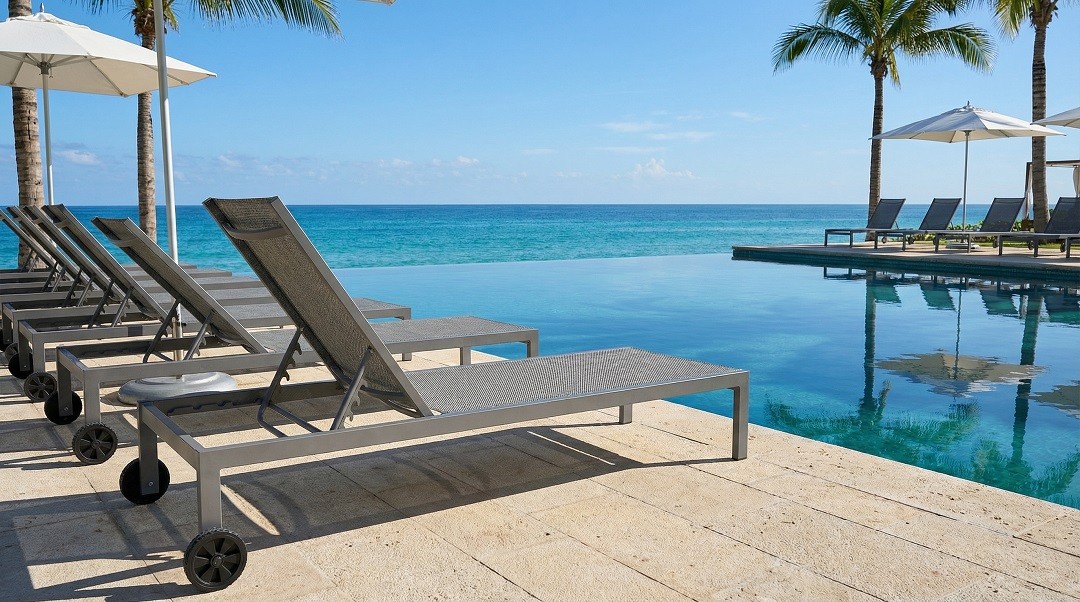
What Outdoor Furniture Wholesalers Really Buy When They Order Outdoor Lounger Chairs
Residential vs Commercial: Where the Specification Line Sits
Six Failures That Generate Wholesale Warranty Claims
Sagging sling
Loose backrest
Corrosion at hardware
Batch colour drift
Transit damage
Unserviceable design
Commercial Chaise Lounges by Material: Match the Build to the Exposure
Construction
Best environment
Maintenance profile
Wholesale note
Powder-coated aluminium + Textilene sling
Chlorinated pool decks, high-turnover resorts, daily wash-downs
Lowest: hose down, quick drain, replaceable sling panels
Safest default SKU for distributors serving mixed climates
Aluminium + woven rope or UV-stable PE rattan
Beach clubs, cabanas, design-led hotel terraces
Low to medium: inspect weave tension and edges seasonally
Higher perceived value and stronger catalogue photography
Aluminium + Polywood or synthetic-teak slats
Exposed decks wanting a timber look without timber upkeep
Low: wipe clean, drains quickly after rain
Good mid-tier upsell; confirm UV rating of the slat
Solid teak or treated timber
Covered spa terraces, shaded low-turnover zones
High: oiling, sanding, seasonal inspection
Premium look, heavier freight, quote the maintenance cycle
Powder-Coated Aluminium with Textilene: The Pool Deck Default
Woven Rope and PE Rattan: Resort Aesthetics Without the Rot
Wood-Look Slats and Teak: Where They Still Make Sense
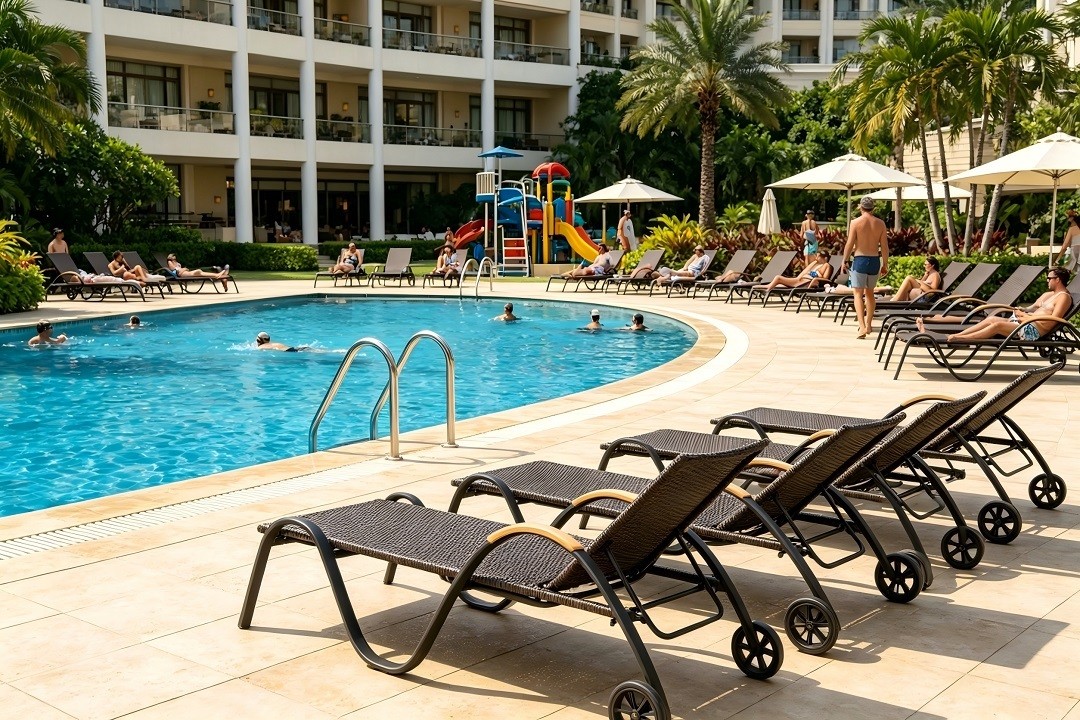
Dimensions, Deck Layout and Quantity Planning for Poolside Chaise Lounges
How Many Chaises Should a Resort Pool Have?
Stacking, Storage and Freight Density
Certificates Buyers Ask For by Market
From Unit Price to Landed Cost
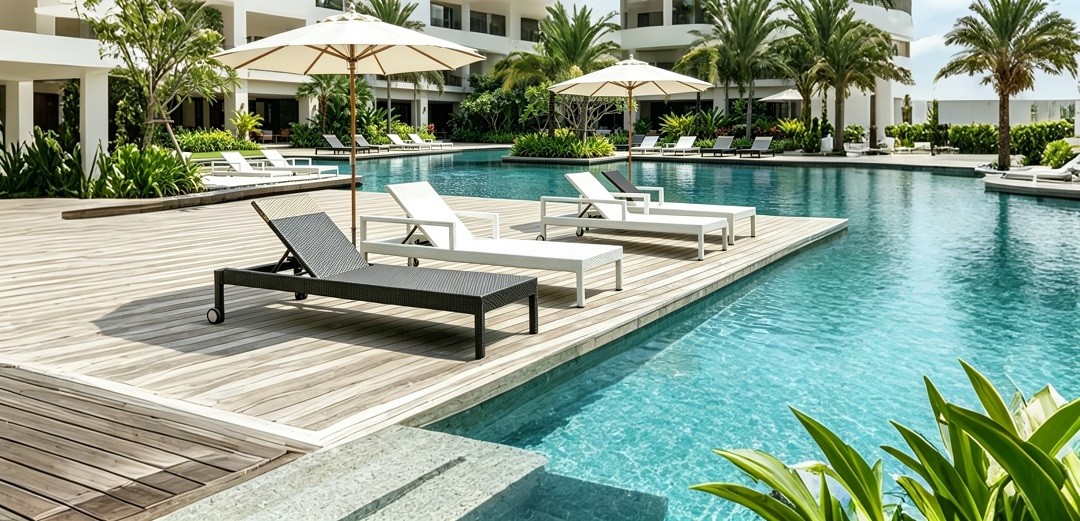
Customisation and Private-Label Programs for Distributors
Quick Answers for Poolside Lounger Buyers
What is the difference between residential outdoor lounger chairs and commercial chaise lounges?
How many poolside chaise lounges does a resort need?
Are stackable commercial sun loungers worth the extra cost?
What is a realistic lead time for a wholesale chaise lounge order?
Can commercial chaise lounges be customised for a distributor's own brand?
Let CDG Build Your Commercial Chaise Lounges Specification With You